Renown
Trading: 1949 - 1958 ~ Penshurst, NSW.
Started making toys after World War 2, including children's toy tool sets and model steam engines. The steam engine boilers used war surplus brass shell cases. Competition in the 1950's from imported toys saw the end of production.Add your business motto by double clicking
Renown produced four different steam models:
Vertical Engine (Model 101)
Steam Roller (model 105)
'O' Gauge 0-4-0T Loco
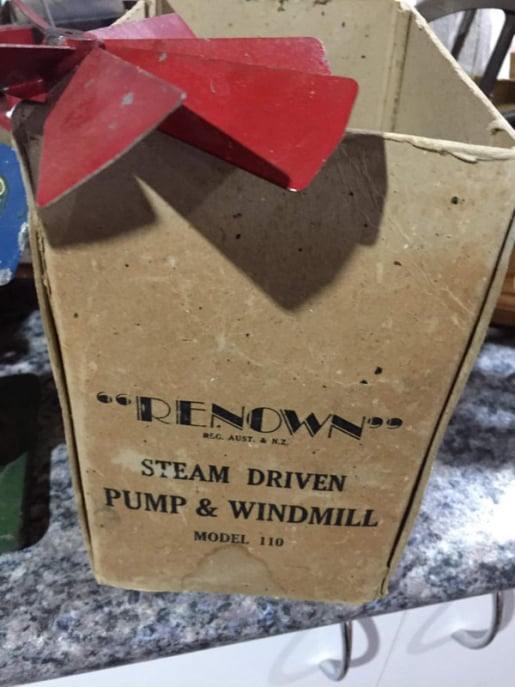
Windmill and Pump (Model 110)
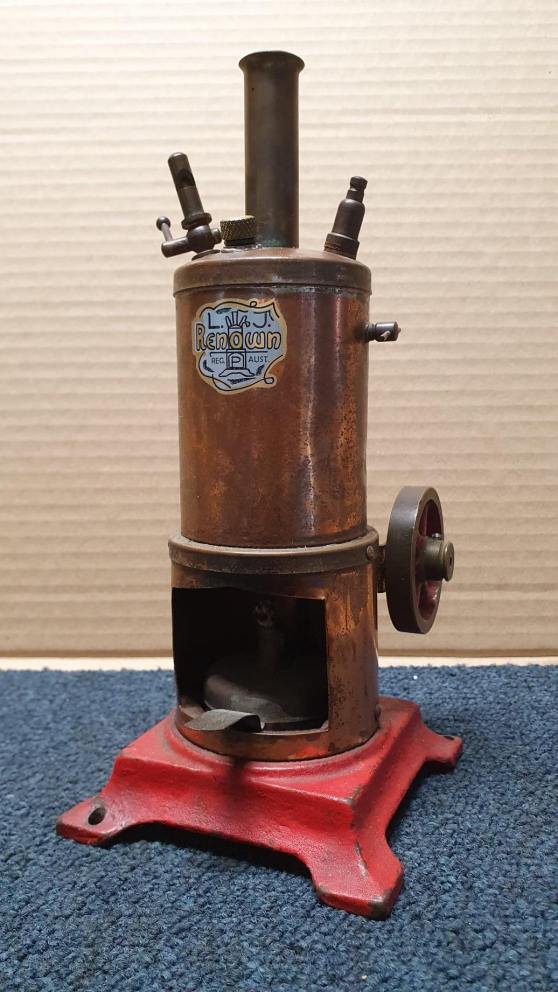
Vertical Engine (Model 101)
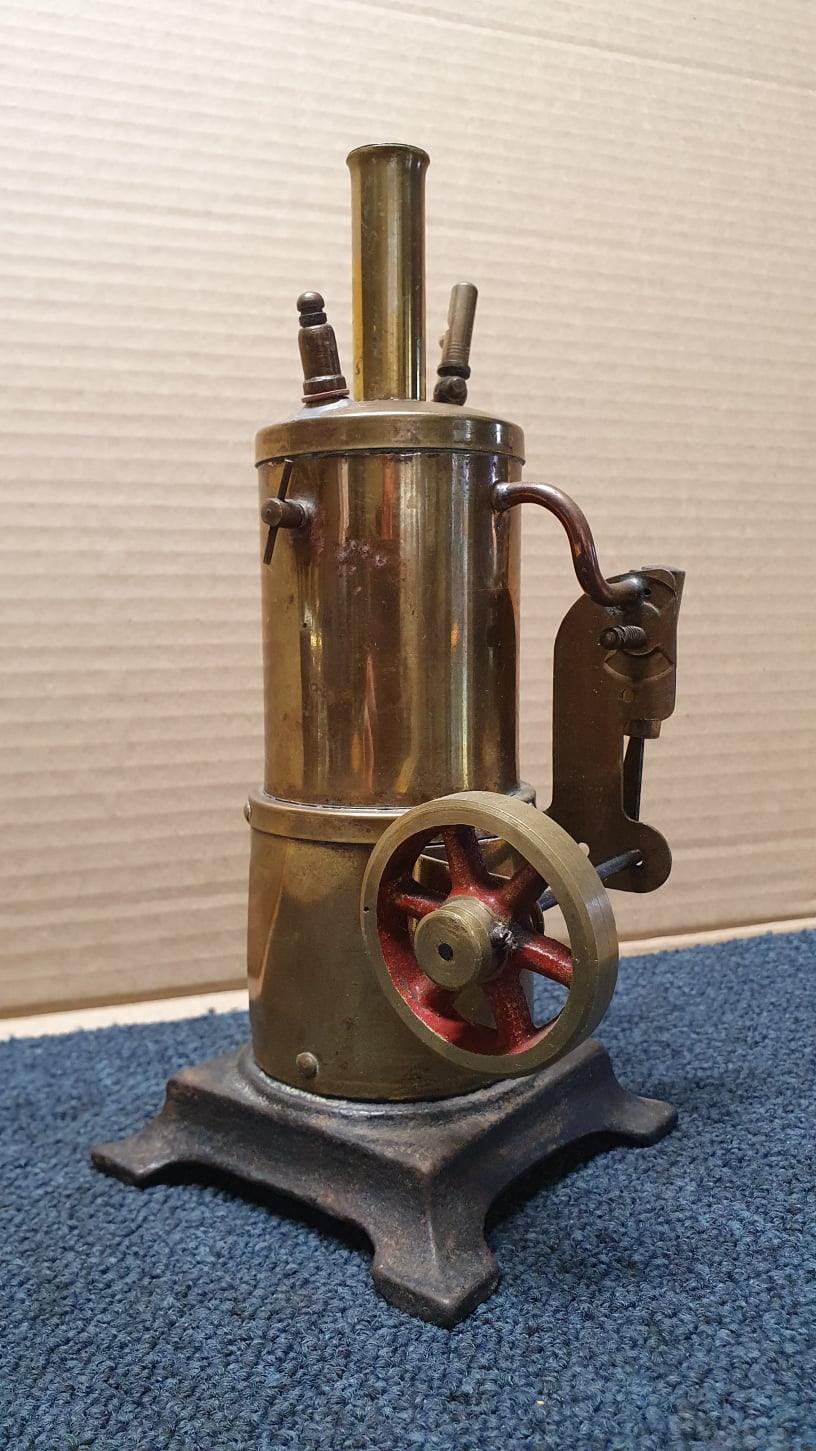
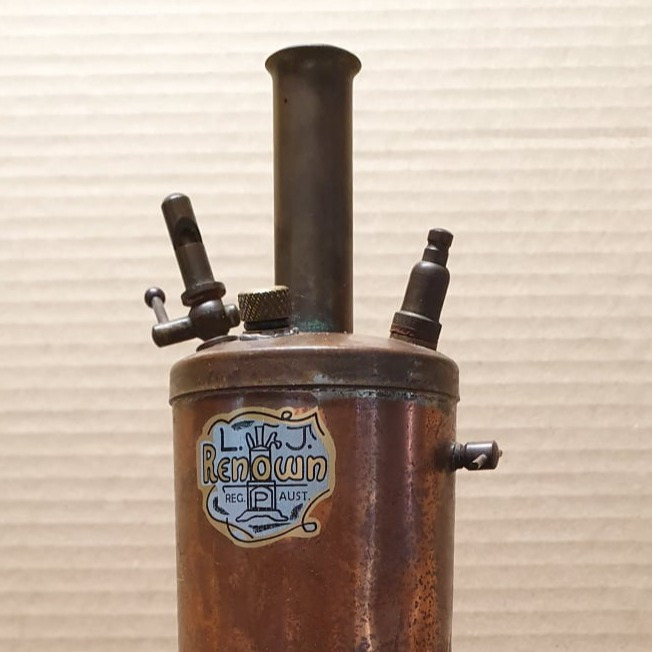
A number of manufacturing changes took place over the production life of these engines resulting in 3 distinct versions:
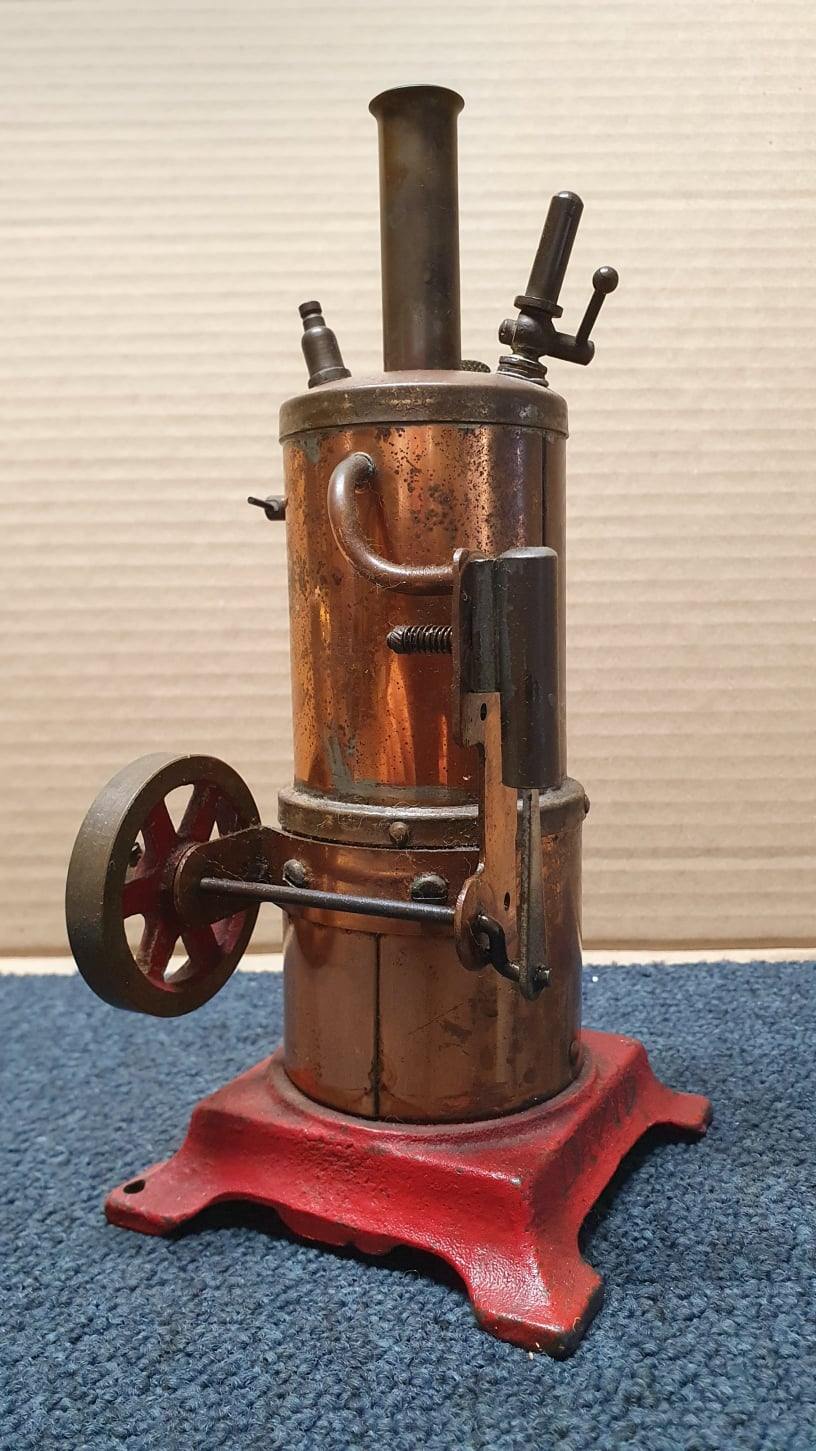
The earliest engines just had a safety valve & a whistle. The second version had a safety valve, whistle & water level plug. The final version had the safety valve, whistle, water level plug & a filler plug located between the whistle and safety valve.
Early engines were made entirely out of brass (with a cast iron base). Later on they changed to a brass boiler with a copper firebox & engine frame. Then finally to an all copper version.
Steam Roller (Model 105)
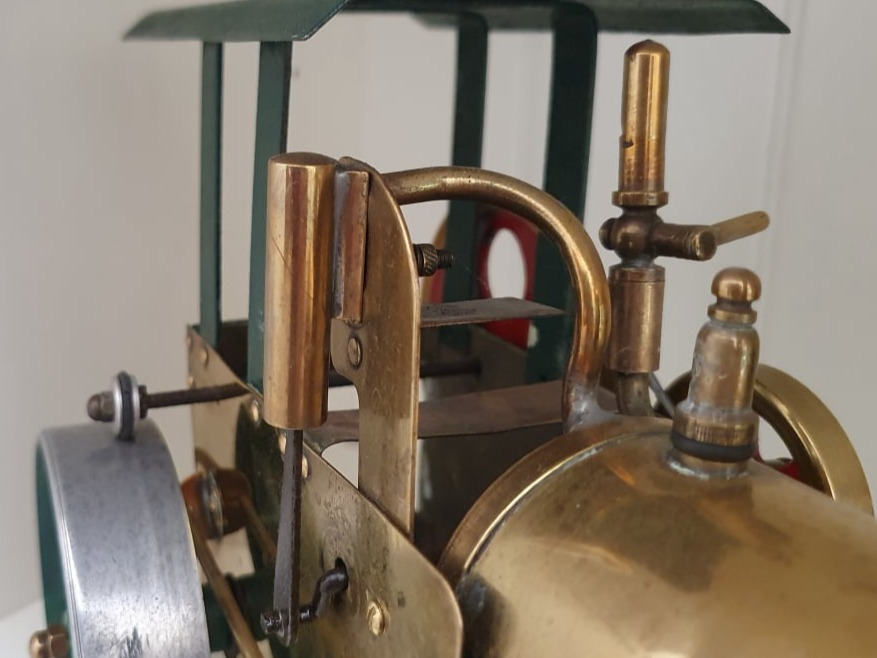
The steam roller used the same boiler components of the vertical engine.
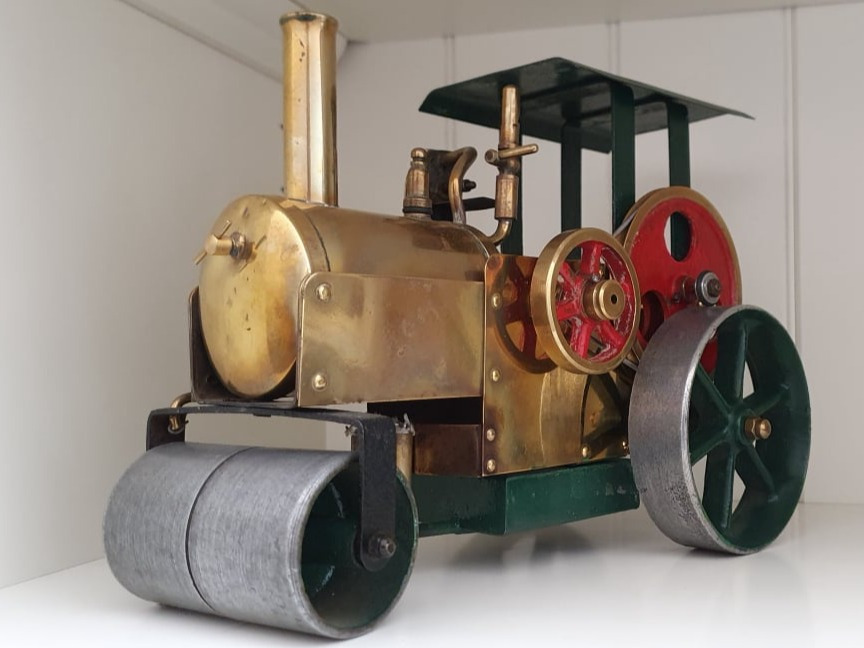
The rear wheels are driven by a couple of small rubber wheels attached to the flywheel drive shaft. The burner is permanently attached to the underside of the engine, and swivels out to one side to allow re-fuelling.
(Note: that the small aluminium & rubber driving wheels visible in the above photos are not original, the original driving wheels were solid rubber)
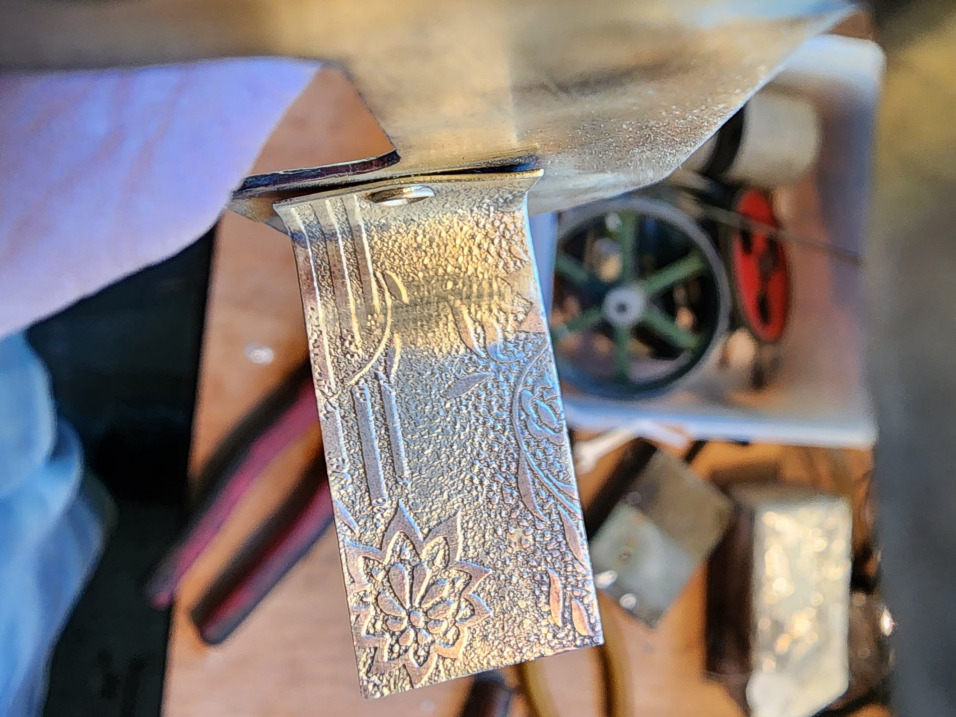
One of the difficulties that manufacturers faced in the years immediately after World War II was a shortage of materials, so manufacturers sometimes had to use what that could.
A nice example of this can be found hidden in plain sight on some steam rollers. The underside of the small brass plate located under the cylinder trunnion bolt is embossed!
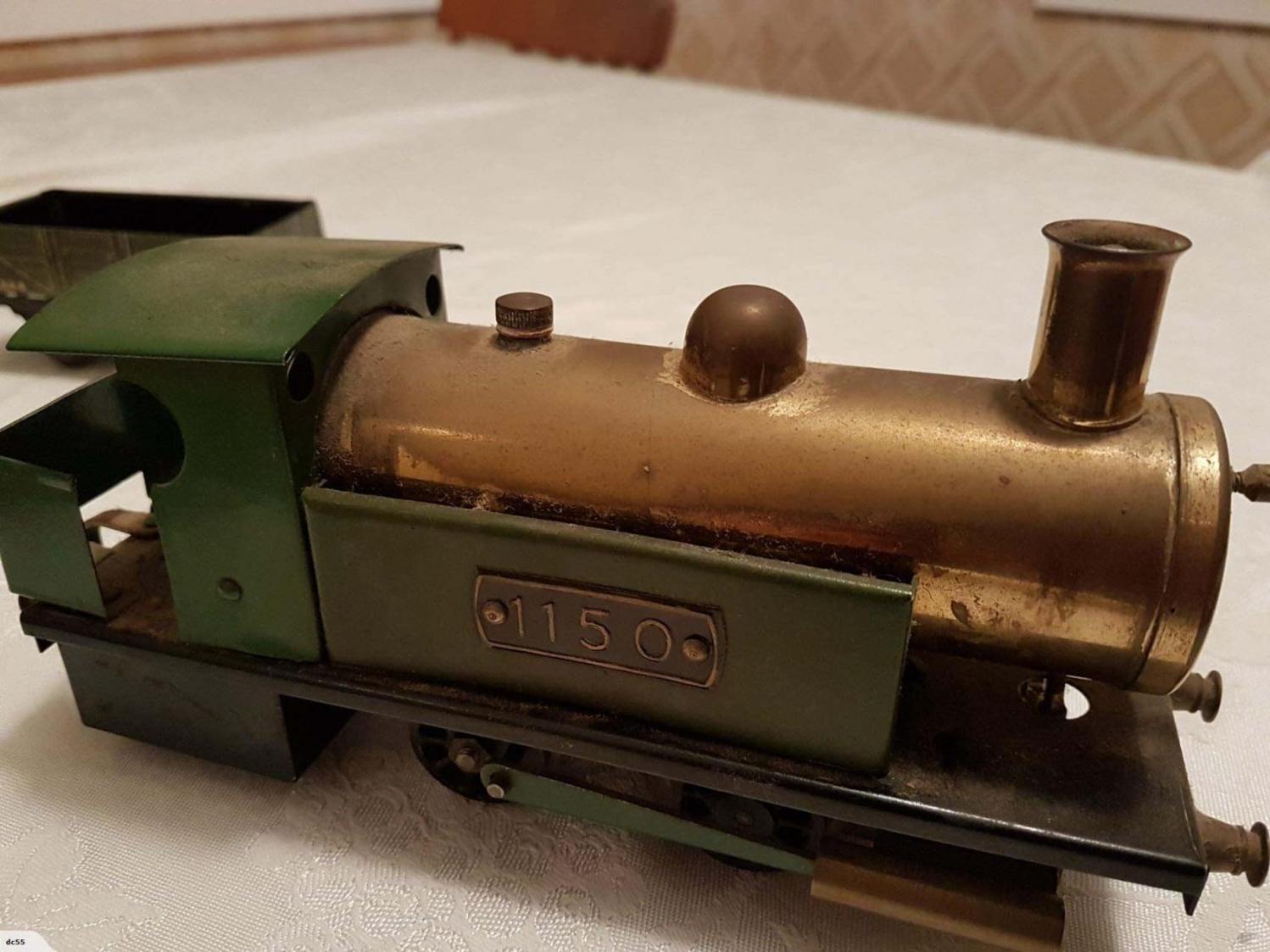
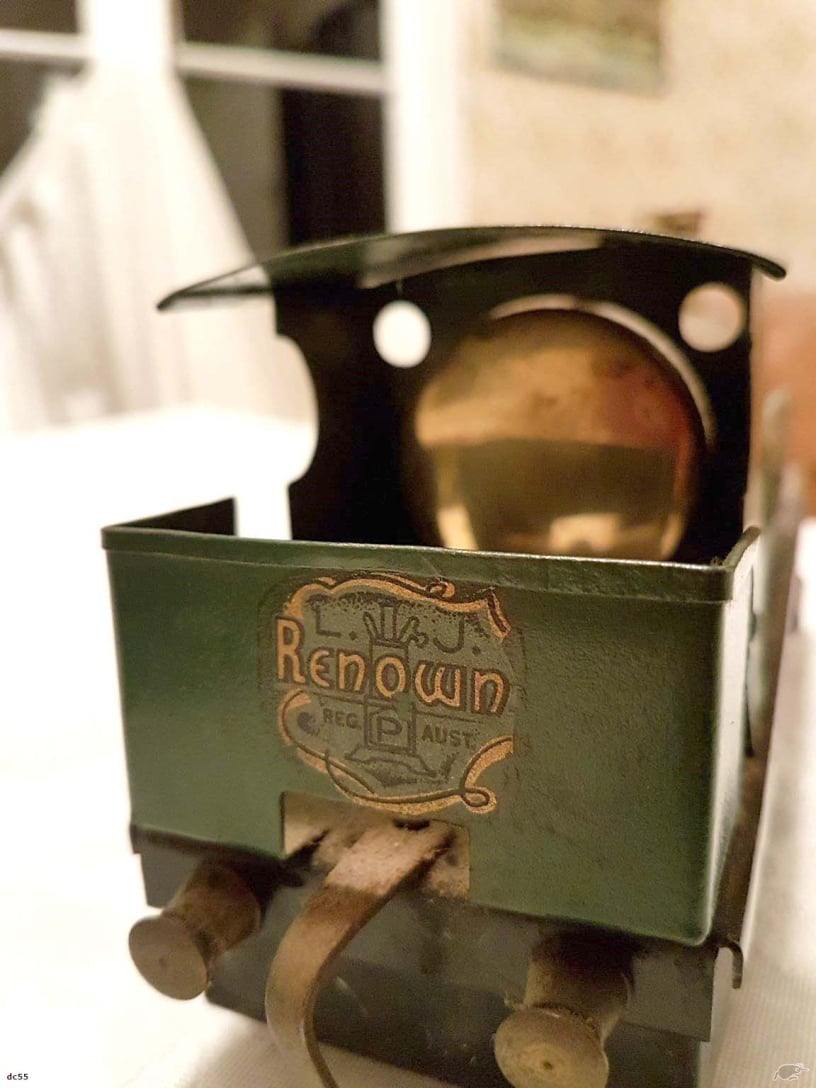
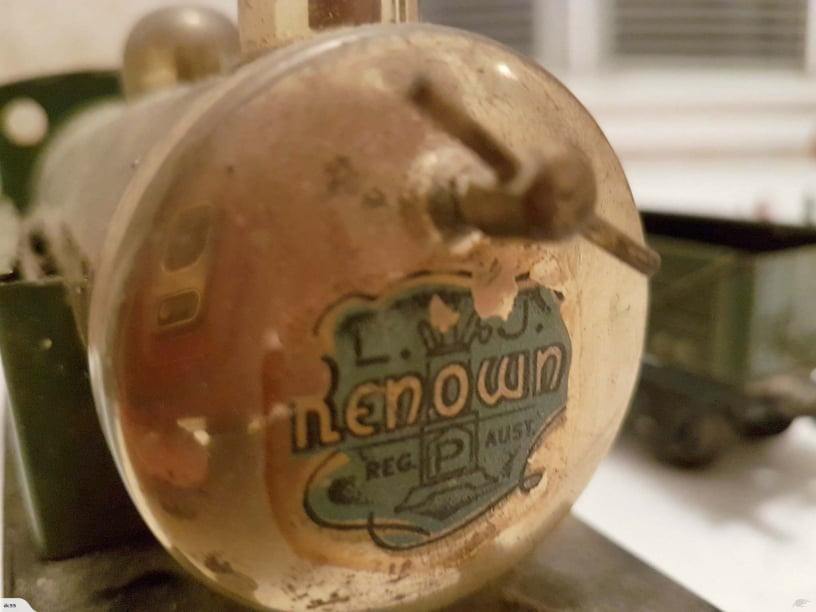
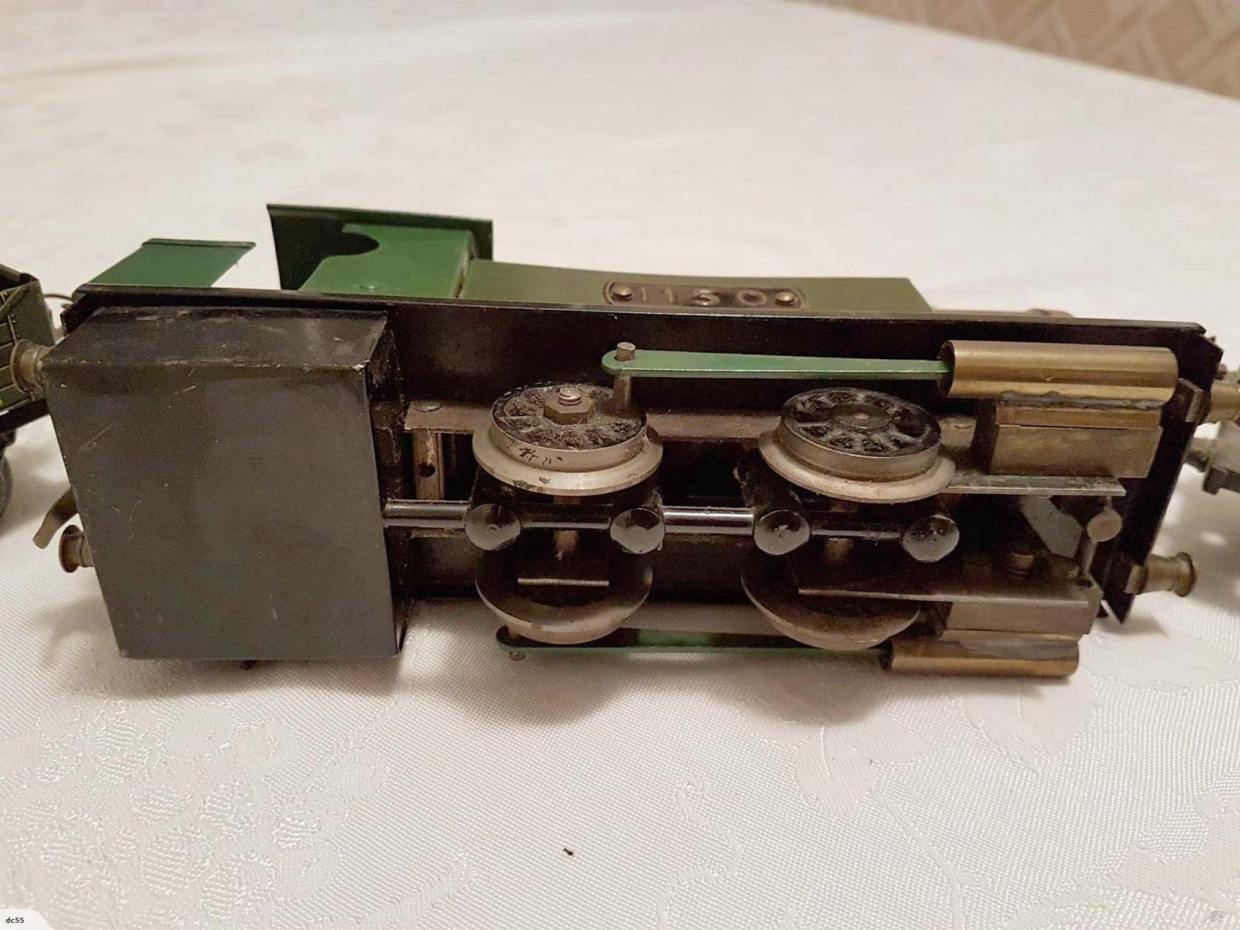
O Gauge - 0-4-0T Loco
The design being based on a English model engine, the Bowman 0-4-0T No.300.
Renown Locos had a unique feature not used on the other Renown engines in that the safety valve was hidden inside the chimney.
Windmill and Pump (Model 110)
This model included the vertical engine mounted on a much larger cast iron base, with a windmill and a working water pump recirculating water.
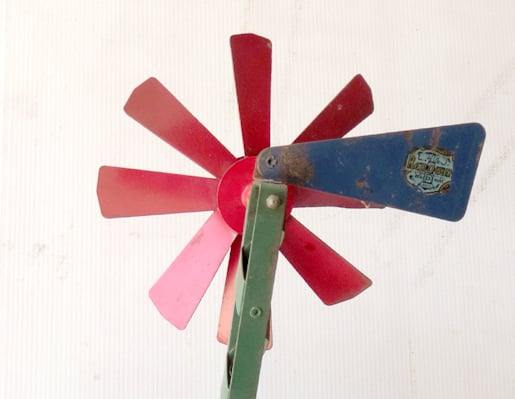
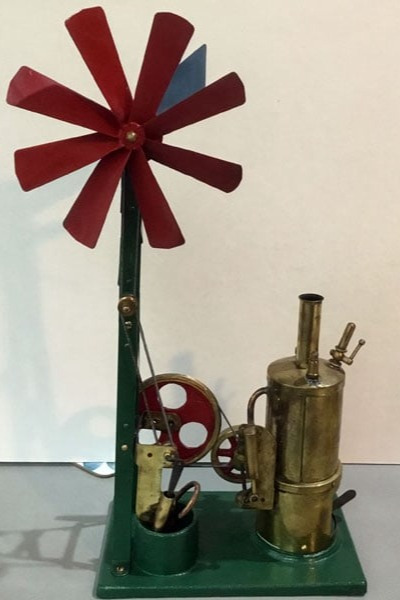
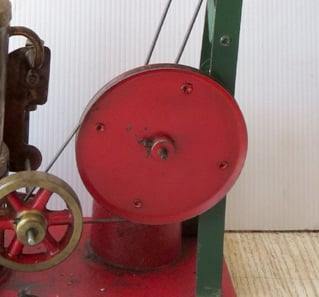
Early versions had a large brass cast pulley with three holes on the tower, whereas later versions had a riveted tin pulley.